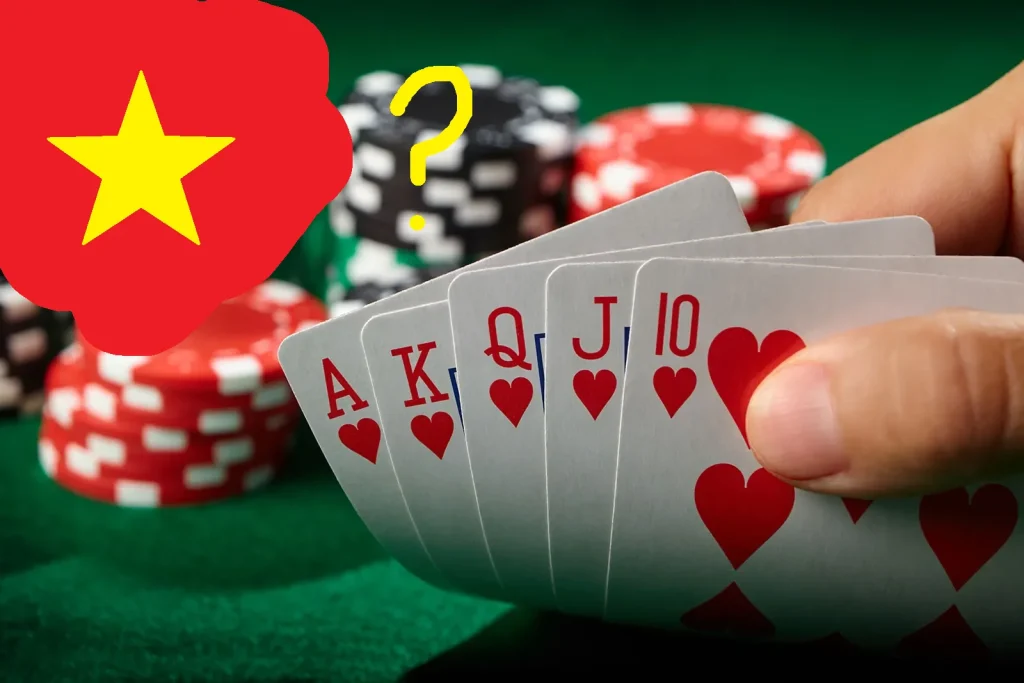
Embark on your journey into the fascinating world of Vietnamese poker with our comprehensive Mau Binh Guide BET168 – How to Play Vietnamese Poker. Whether you’re new to card games or a seasoned player looking to refine your skills, understanding the fundamentals and strategic intricacies of Mau Binh (also known as Vietnamese Poker) can significantly enhance your gaming experience. This guide aims to provide detailed insights, practical tips, and comparisons to help you excel at this engaging game.
Understanding the Origins and Rules of Mau Binh
Before delving into gameplay strategies, it’s essential to grasp the roots and fundamental rules of Mau Binh. This traditional Vietnamese card game combines elements of skill, strategy, and psychology, making it an exciting and challenging pastime.
When you use the Mau Binh Guide – How to Play Vietnamese Poker, you gain a structured approach that demystifies the complex rules and prepares you for competitive play. Proper understanding maximizes enjoyment and boosts your chances of winning.
The Historical Roots and Cultural Significance of Mau Binh
Vietnamese Poker, or Mau Binh, has deep cultural roots that reflect the Vietnamese people’s affinity for socializing and gambling in a fun, strategic environment. Its history dates back decades, evolving from traditional card games played informally in villages to more organized contemporary tournaments.
This game is often played during family gatherings and festivals, symbolizing unity and camaraderie. Learning about its cultural significance enriches your appreciation of the game and fosters respect for its traditional origins.
Basic Rules and Setup for Mau Binh
The core of Mau Binh Guide – How to Play Vietnamese Poker involves a standard deck of 52 cards, often with multiple players—usually 4 to 6—participating simultaneously. Each player receives 13 cards, which they must organize into three hands: two five-card hands and one three-card hand, arranged from strongest to weakest.
Participants aim to arrange their hands so that the first two (front and middle) are stronger than the last (the three-card) hand, following specific hierarchy rules. Players compare each of their three hands against opponents’ corresponding hands, with the goal of winning as many as possible overall.
The game emphasizes strategic card arrangement, bluffing, and careful observation of opponents’ behaviors. Mastering the rules is critical to avoid fouls like misarranged hands, which can result in penalties or disqualification.
Strategies for Beginners and Advanced Players
Starting with beginner strategies involves understanding the significance of hand strength and basic card combinations. As players grow more confident, advanced tactics focus on anticipating opponents’ moves and employing psychological tactics to mislead.
A key component of Mau Binh Guide – How to Play Vietnamese Poker is knowing when to be conservative versus aggressive. For example, holding onto strong pairs or sequences may pay off, but overconfidence can lead to risky plays. Developing a keen eye for patterns and subtle tells enhances your gameplay.
The Art of Hand Arrangement and Card Strategy
One of the most critical aspects of Mau Binh is mastering how to effectively arrange your cards into the optimal three hands. This skill can determine your success rate, especially as games intensify and opponents adopt complex strategies.
In this section, we explore how to strategize your hand arrangement, compare different approaches, and analyze common mistakes to avoid.
Principles of Effective Hand Arrangement
Effective hand arrangement hinges on balancing risk and reward while adhering to game rules. The fundamental principle is to ensure that your front hand (the weakest five-card hand) is weaker than your middle hand, and your middle hand is weaker than your back hand. Any violation results in disqualification or a penalty.
A good starting point is categorizing your cards: identify pairs, sequences, flushes, and triplets early. Prioritize strengthening your back hand with the best possible combination, as it carries the most weight during comparisons.
Additionally, consider the potential of your remaining cards to form valid and strong middle and front hands. Sometimes, sacrificing a very strong back hand to secure a balanced overall setup yields better outcomes.
Comparing Different Arrangement Strategies
Players often compare various strategies to determine the most advantageous card placement. For instance, some prefer preserving all high cards for the back hand, even if it means weaker middle and front hands. Others might balance the strength across all three to maximize overall wins.
In the Mau Binh Guide – How to Play Vietnamese Poker, understanding these comparisons involves assessing risk profiles and opponent tendencies. Aggressive players tend to push their stronger cards into the back hand, aiming for dominant wins, while defensive players aim for balanced hands to avoid penalties and maintain consistency.
Common Mistakes and How to Avoid Them
Many novice players fall into the trap of misarrangement, such as placing a high card or pair in the front hand when it should be reserved for the back. Another common mistake is failing to adhere to the rule that the three hands must be in increasing order of strength, which can lead to penalties.
To avoid these pitfalls, always double-check your hand arrangement before revealing it. Use a mental checklist: Is my back hand the strongest? Is my middle hand stronger than my front? Are all hands valid and following the hierarchy? Practicing these steps enhances accuracy and improves your overall success.
Comparing Mau Binh with Other Poker Variants
Understanding where Mau Binh fits among global poker games helps players appreciate its unique characteristics and strategic nuances. Unlike Texas Hold’em or Omaha, Mau Binh emphasizes hand organization, psychological bluffing, and strict hierarchical rules.
Similarities and Differences with Poker Variants
| Feature | Mau Binh | Texas Hold’em | Omaha |
| Number of Cards | 13 cards per player | 7 cards per player | 4 hole cards + 5 community cards |
| Main Focus | Hand arrangement and hierarchy | Best five-card hand | Best five-card hand |
| Strategic Emphasis | Psychological, positional play | Betting, community cards | Betting, community cards |
| Game Objective | Win more hands through arrangement | Make best five-card hand | Make best five-card hand |
| Complexity | Tactical, requires planning | Fast-paced, probability-based | Complex, multi-stage decision-making |
As seen in the table, Mau Binh diverges from traditional poker by requiring players to arrange several hands rather than just forming a single hand. This aspect demands a unique combination of strategy, foresight, and psychology, making it distinct and engaging.
Strengths and Limitations Compared
Strengths
- Emphasizes mental calculation and strategic planning
- Cultivates psychological skills and bluffing tactics
- Promotes social interaction and cultural connection
Limitations
- Less suitable for high-stakes gambling due to its reliance on skill and arrangement rather than luck
- Longer game times per round due to hand organization phases
- Can be confusing for beginners unfamiliar with hierarchical hand rules
Impact on Player Strategy and Skill Development
Compared to other poker variants, Mau Binh’s focus on hand organization develops critical thinking and pattern recognition skills. Players learn to evaluate strong versus weak hands under pressure, balancing risk and reward. The game’s uniqueness invites creative strategies like deceptive arrangements and psychological bluffs, contributing to richer gameplay experiences.
Essential Tips and Advice for Mastering Mau Binh
Success in Mau Binh is a culmination of strategic planning, psychological insight, and disciplined practice. Incorporating expert advice from experienced players can dramatically accelerate your learning curve.
Developing a Consistent Practice Routine
Regular practice, either through online platforms or live tournaments, is vital. Set aside dedicated time to analyze your previous hands, review arrangements, and experiment with different strategies. Use simulation tools or card analysis software to test various arrangements and assess their effectiveness.
Consistency fosters pattern recognition, enhances decision-making speed, and sharpens your intuition. Remember, mastery of Mau Binh requires patience and dedication over many sessions.
Psychological and Behavioral Strategies
Reading opponents’ behaviors and employing psychological tactics can give you an edge. Practice observing subtle cues, such as hesitation, facial expressions, or betting patterns. Use these insights to infer their hand strength and adjust your strategy accordingly.
Additionally, incorporate controlled bluffing—sometimes feigning confidence or weakness—to mislead opponents. Managing your demeanor and responses is as crucial as the cards themselves.
Final Tips for Success
- Always double-check your hand arrangement before revealing.
- Stay disciplined—avoid reckless plays driven by emotion.
- Focus on conservative strategies early, then gradually adopt riskier tactics as you gain confidence.
- Study and learn from experienced players’ games, both online and offline.
- Keep a cool head, regardless of wins or losses, to make rational decisions.
Conclusion
Mastering Cách Chơi Mậu Binh – How to Play Vietnamese Poker involves understanding its rich cultural roots, learning how to strategically arrange hands, and developing psychological finesse against opponents. By familiarizing yourself with its rules and comparing its structure to other poker variants, you can appreciate its unique appeal. Success hinges on disciplined practice, keen analysis of game situations, and the ability to deceive and read opponents effectively. Whether you are playing for fun or aiming to compete at higher levels, the key lies in continuous learning and enjoying the game’s social and strategic richness.